 United States
Major League Pickleball x TORAY
Exclusive Interview with Professional Pickleball Player: Yuta Funemizu
The First Japanese Player in Major League Pickleball
Yuta Funemizu on His Challenges and Efforts
October 10, 2025
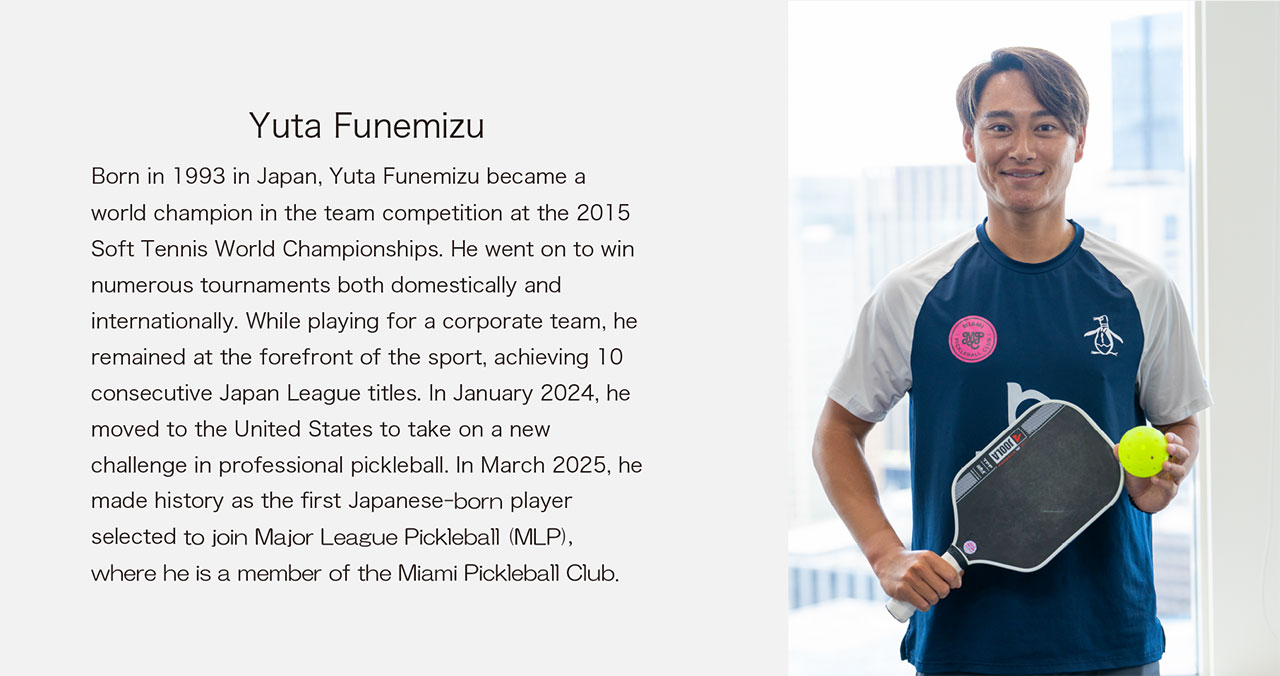
Yuta Funemizu has been a champion on the front lines of soft tennis, shining in numerous international competitions. As a new challenge, he moved on his own to the United States, and in March 2025 became the first Japanese player to be drafted into the Premier Level of Major League Pickleball (MLP). In this conversation, he shares how he has applied the skills honed through soft tennis to his pickleball journey, and discusses his expectations for Toray as a sponsor of MLP.

Q1. How did you discover pickleball?
In 2020, shortly after I became a professional soft tennis player, all domestic and international tournaments were canceled due to the pandemic. As I struggled with feelings of helplessness, an acquaintance introduced me to pickleball, mentioning how it was growing rapidly in the United States.
Having already won almost all titles in soft tennis, including world championships, I reasoned that if I had that ability, I might also be successful in pickleball. I immediately contacted the Japan Pickleball Association, and they gave me an opportunity to hear from the Japan champion at the time.
Q2. What did you find appealing after trying it?
The court is narrower than soft tennis, and I like that it was easier to continue the rally. I had previously taught soft tennis classes all around Japan, and I know how difficult it is to teach racquet sports. Beginners often struggle just to serve, and if the rally doesn’t carry on, they quickly lose interest. In that respect, with pickleball, even beginners can keep a rally going after just 10 or 20 minutes of practice, and enjoy the game. And when playing doubles, you stand close to each other, making it easier to communicate on the court, such as encouraging your partner to take the next shot. I think it’s a sport that fosters connections between people.

Q3. How did you feel about the excitement for pickleball in the United States, where the sport was born?
When I visited Los Angeles for the first time in 2023, I was surprised to find that pickleball courts were everywhere in the city. Even on weekday mornings, the courts were full, with long waiting times for them to become available. From free public courts to members-only clubs, it seemed that an atmosphere had been established where people from all walks of life could enjoy the game. I felt the potential for pickleball to become popular in Japan at some point.
Q4. You had already built a career in soft tennis. What made you decide to try the new world of pickleball?
I was motivated by the idea of how I could make use of the skills I had mastered in soft tennis to compete on the big stage in the United States. I also felt that pickleball had the potential to be a “gateway” to boost racquet sports in general. My hope is that once people came to know the fun of racquet sports through pickleball, they would also become interested in other sports such as tennis, badminton, and table tennis. As a pioneer aiming to be the best in the world, I had a dream of leading the boom in Japan.
Q5. You went to the U.S. on your own. You must have faced a lot of difficulties.
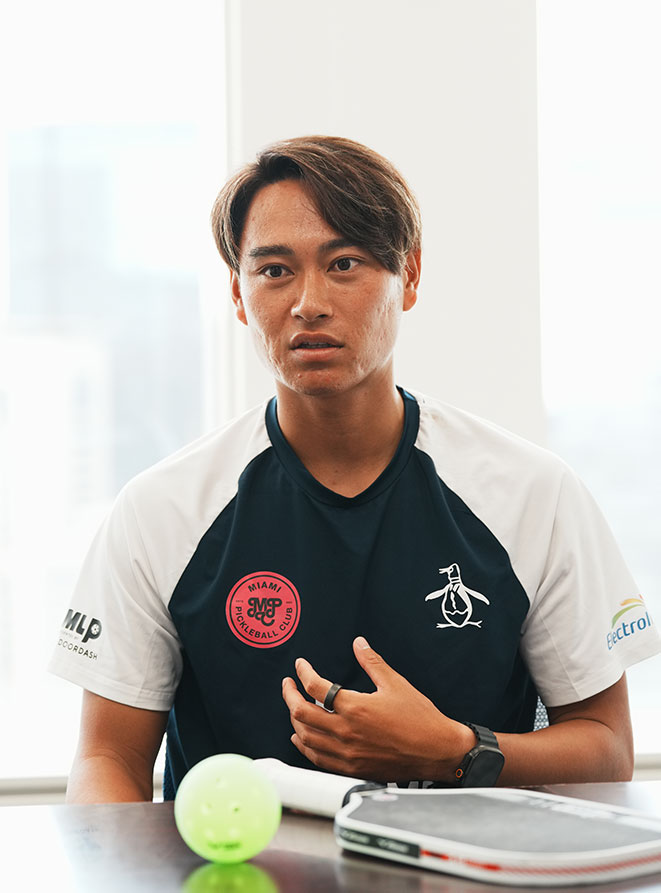
It was quite difficult at first. I could barely speak English, so I couldn't find a practice partner, and no one wanted to pair up with me in doubles. My playing style was unique, incorporating soft tennis techniques, so I think that made others even more hesitant.
Still, at the match venues, I would approach people and ask if they would like to practice together, or pair up for a match at some point, and we would exchange contact information. As I continued to win matches, others gradually came to accept me as a doubles partner.
Q6. How do you make use of your soft tennis skills in pickleball?
In pickleball volleys, like in regulation-ball tennis, you use different sides of the paddle for forehand or backhand. In soft tennis, however, you use the same side for both. No other player uses this soft tennis style of swing, so my opponents have trouble reading the ball, making it difficult to return.
Q7. Did this technique work from the start?
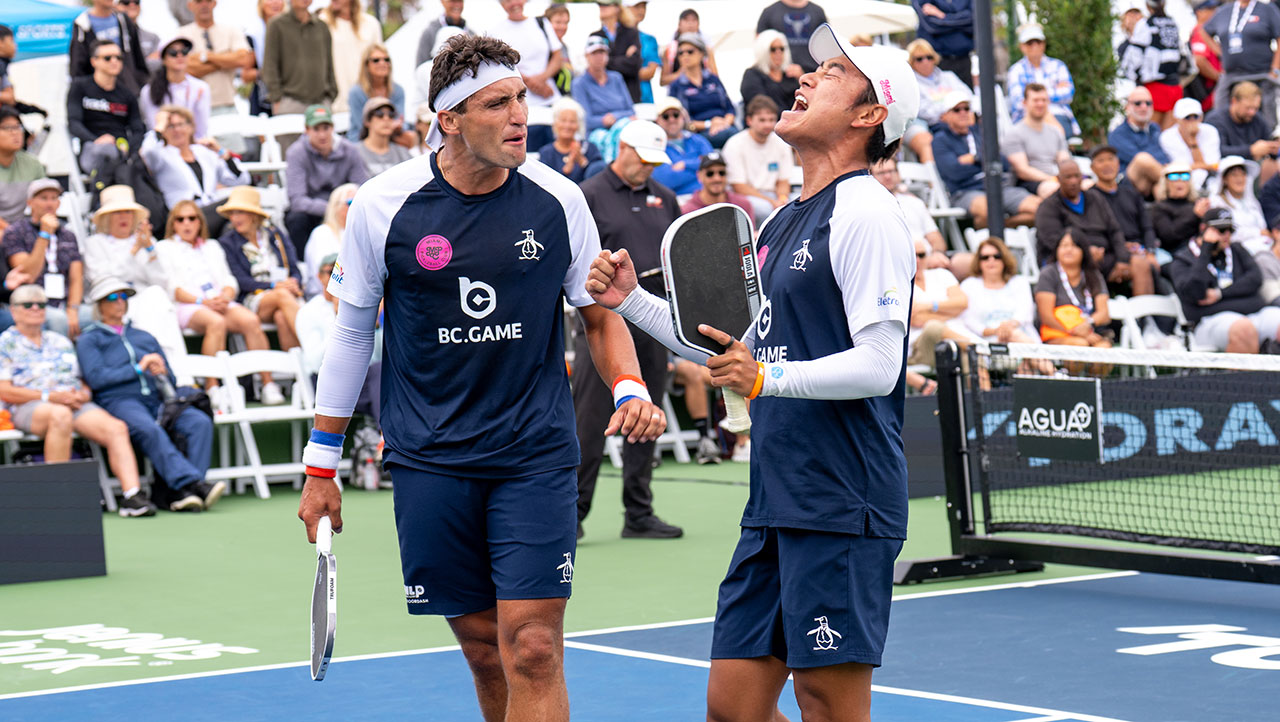
No. For the first two months, I couldn’t even beat amateurs, so my coach and other players would tell me that I should give up on that style. In fact, I switched to the basic way of playing for about a week. However, with so many rivals, I thought that I wouldn’t be able to win in this sport unless I broke with convention, so I decided to stick with my own style. Nowadays, this is called “YUTA style”, and top players often ask me how they can do it.
Q8. What do you like best about living in the United States and interacting with local people?
I feel like people accept me warmly, going beyond borders and race. When I was practicing alone, people would ask me to join them, and sometimes we would go to lunch afterward. I’m more connected with people, and I’ve become more sociable, so I feel like my life has become richer.
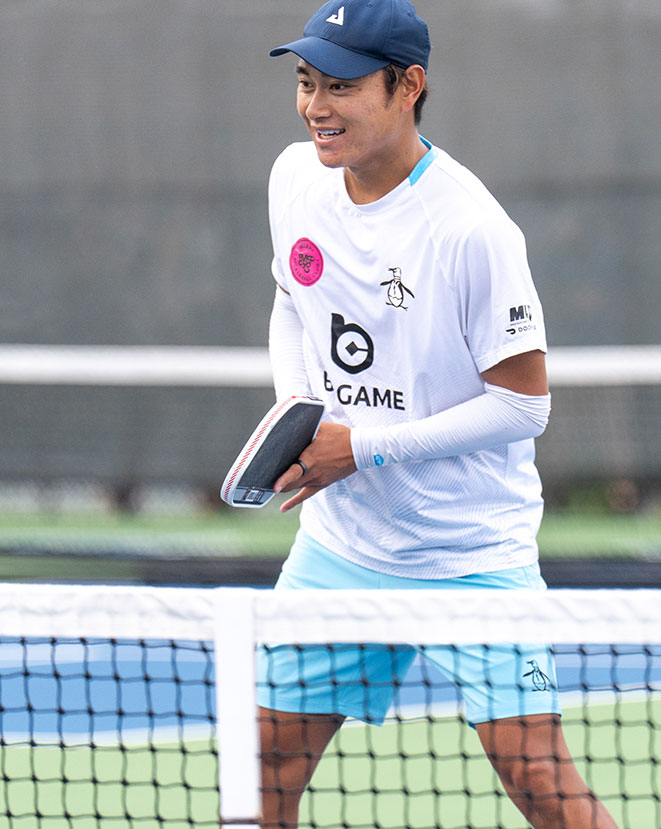
Q9. In March of this year, you were drafted by the Miami Pickleball Club, becoming the first Japanese MLP player. How did you feel?
I had won the professional qualifiers a week before the draft, but since few people knew who I was, I was anxious that I might not get picked. To increase my chances, I sent direct messages to all the teams, asking them to take a look at my skills. Fortunately, six teams contacted me for tryouts in response.
It was a hectic week. I flew to Los Angeles for one tryout, took a midnight flight to Miami for another, and then returned to Los Angeles for the third. Despite the intense schedule, I felt the tryouts went well. Still, with the draft approaching, I assumed most teams had already finalized their rosters, so I didn’t have high expectations. That’s why I was genuinely surprised and thrilled when I was drafted. It was an unforgettable moment.
Q10. How has life changed for you since becoming an MLP player?
Joining MLP has brought a major shift in my life. As a player, you gain access to a wide range of support from your team, and the way you're treated changes dramatically. In taxis or at hotels, when people ask if I’m visiting for sightseeing, and I explain that I play professional pickleball in the major leagues, the reaction is always one of excitement. Americans have a lot of respect for pickleball players, and I feel that MLP players in particular, enjoy a special status.
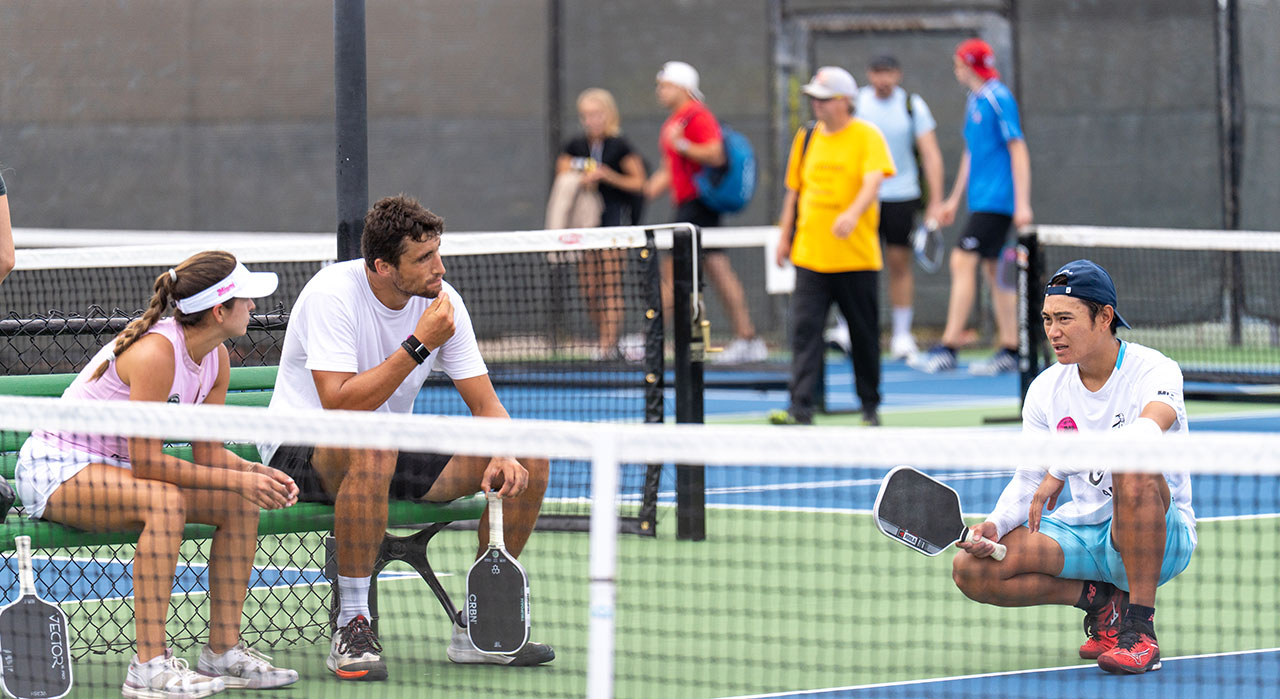
Q11. What are your impressions of Toray becoming the first official MLP sponsor in Asia in April this year?
I am very happy that a Japanese company is now playing a role at the heart of pickleball. Since the sport is not yet widely known in Japan, I sometimes worry about whether I am on the right path, and it is encouraging to think that there are others from Japan who recognize the potential of pickleball and competing at the highest levels.
Q12. What has been the reaction of U.S. players to a Japanese company joining the professional league as a sponsor?
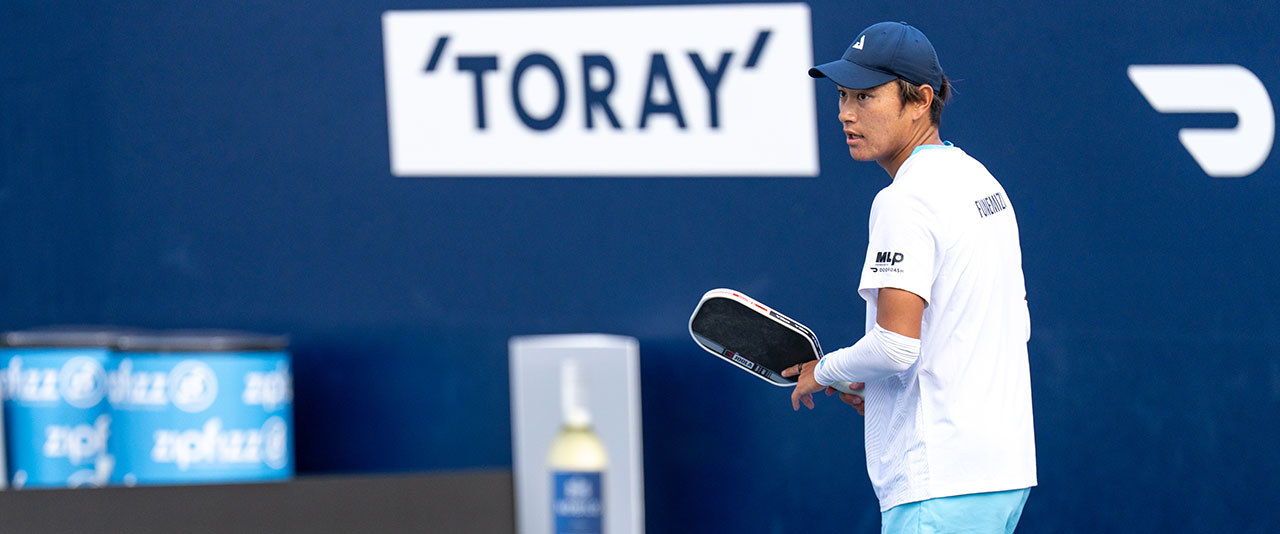
Everyone has shown a lot of interest. When the TORAY name appeared on the court for the first time, it caused quite a stir, and many players commented to me how cool it was to see a Japanese company involved. Toray became a sponsor around the same time that I joined MLP, which helped me because it often sparked conversations.
Q13. Some pickleball paddles are made using Toray carbon fiber. What features do you look for in a paddle? Also, what are your expectations for Toray?
Above all, I want paddles of consistent quality. Currently, many paddles vary in terms of quality. For example, some lack surface roughness, while others feel too soft upon impact. Even small differences in texture can have a big impact on how the ball spins and flies. Before tournaments there is a “paddle check” to confirm that paddles conform to regulations, and many are deemed unusable. Sometimes, you buy 10 paddles and can only use a few. That’s why I hope Toray can leverage its advanced materials technology to develop paddles with greater consistency.
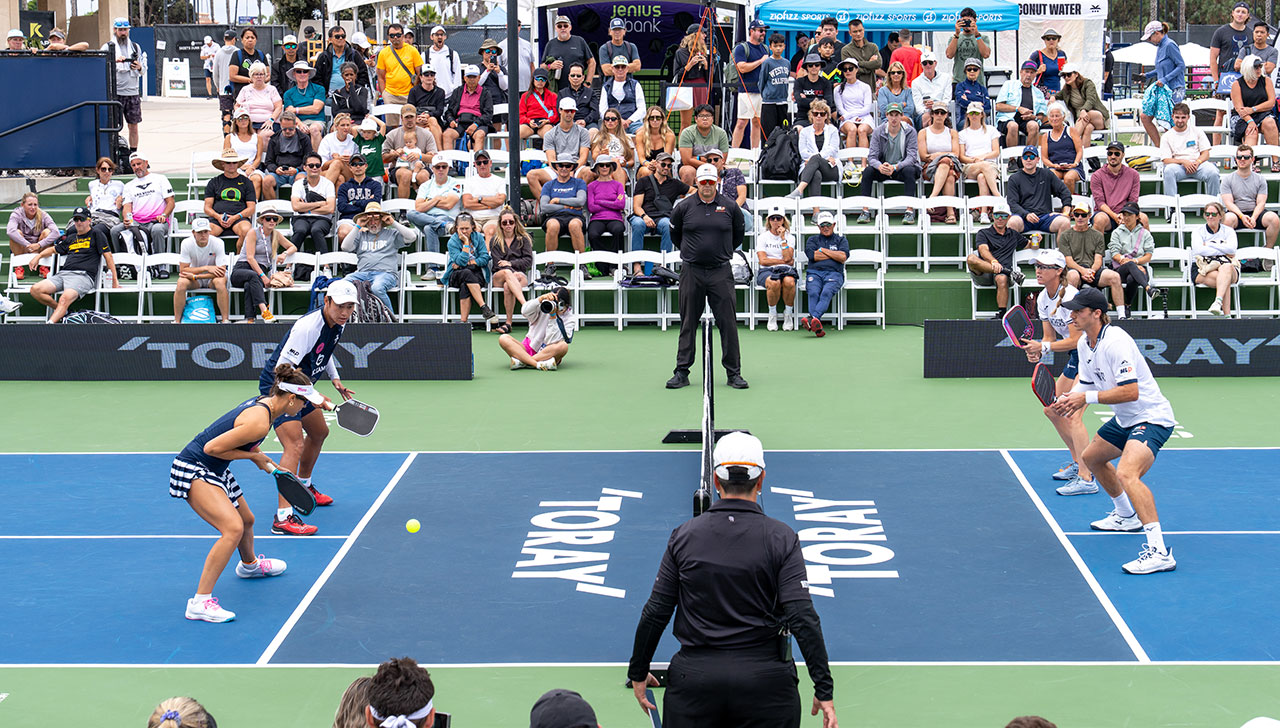
Q14. Toray champions the principles of “Pursuit of the Ultimate Limits” and “Long-term Continuity.” As an athlete, are there aspects of this that you empathize with?
I strongly empathize with these ideas. In the fast-evolving world of pickleball, especially with the integration of new technologies, I believe that maintaining the status quo is essentially a step backwards. I am constantly seeking ways to push beyond my current limits, whether by applying techniques from soft tennis, exploring ways of using the body effectively from other sports, or trying new training methods.
Even if it doesn’t lead to immediate success, I see great value to formulate a hypothesis and give it a try. Experiencing failure strengthens confidence in your existing skill set and encourages you to take the next step forward.
This mindset closely mirrors Toray’s philosophy of pursuit of the ultimate limits and demonstrating unwavering persistence-something I strongly identify with as an athlete.
Q15. Finally, what are your goals for the future?
Simply put, my goal is to become the best in the world. That is, to compete as an individual on the PPA Tour and win the world’s premier team competition, MLP. Each team has passionate fans, and the enthusiasm of the people watching the game is growing. I want to thrive in these fiercely competitive matches and make a name for myself as a Japanese athlete. The path ahead won’t be easy, but I’m committed to pushing forward without giving up.
Contact
Reach out to Toray for innovative materials and solutions and help us form a sustainable future.